Forensic Investigation Consultant FIC
Forensic Investigation Consultant

FORENSIC EXPERT WITNESSES
FORENSIC ANALYSTS
Forensic Investigation Consultant FIC
Forensic Investigation Consultant
FORENSIC EXPERT WITNESSES
FORENSIC ANALYSTS
|
|
What It Examines ^
Wound ballistics is the scientific study of the effects produced when firearm bullets and projectiles penetrate the human body or the body of another living animal. It is a specialized branch of terminal ballistics concerned with the behavior of bullets in tissue and tissue-simulant materials. It examines bullet performance characteristics, including the velocity required to penetrate skin and tissue, expansion, fragmentation, deformation, trajectory deviation (yaw), tumbling, and the characteristics of penetration and velocity loss resulting from the perforation of skin, tissue, and materials whose density approximates that of the human body.
More specifically, wound ballistics, a subdivision of terminal ballistics, is a particularly important branch of the science of ballistics that studies the effects and phenomena produced in human tissue when the body is struck by firearm bullets or projectiles.
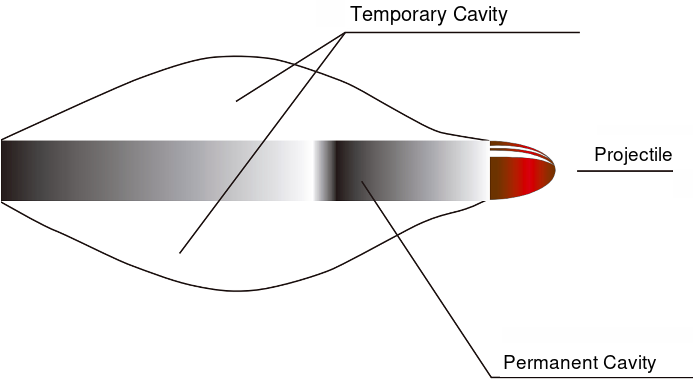
Formation of Wound Cavities. © 2010 Lichte et al.; licensee BioMed Central Ltd.
What It Covers ^
Examples of subjects examined in wound ballistics include:
A. The entry of the projectile into, and its exit from, the human body.
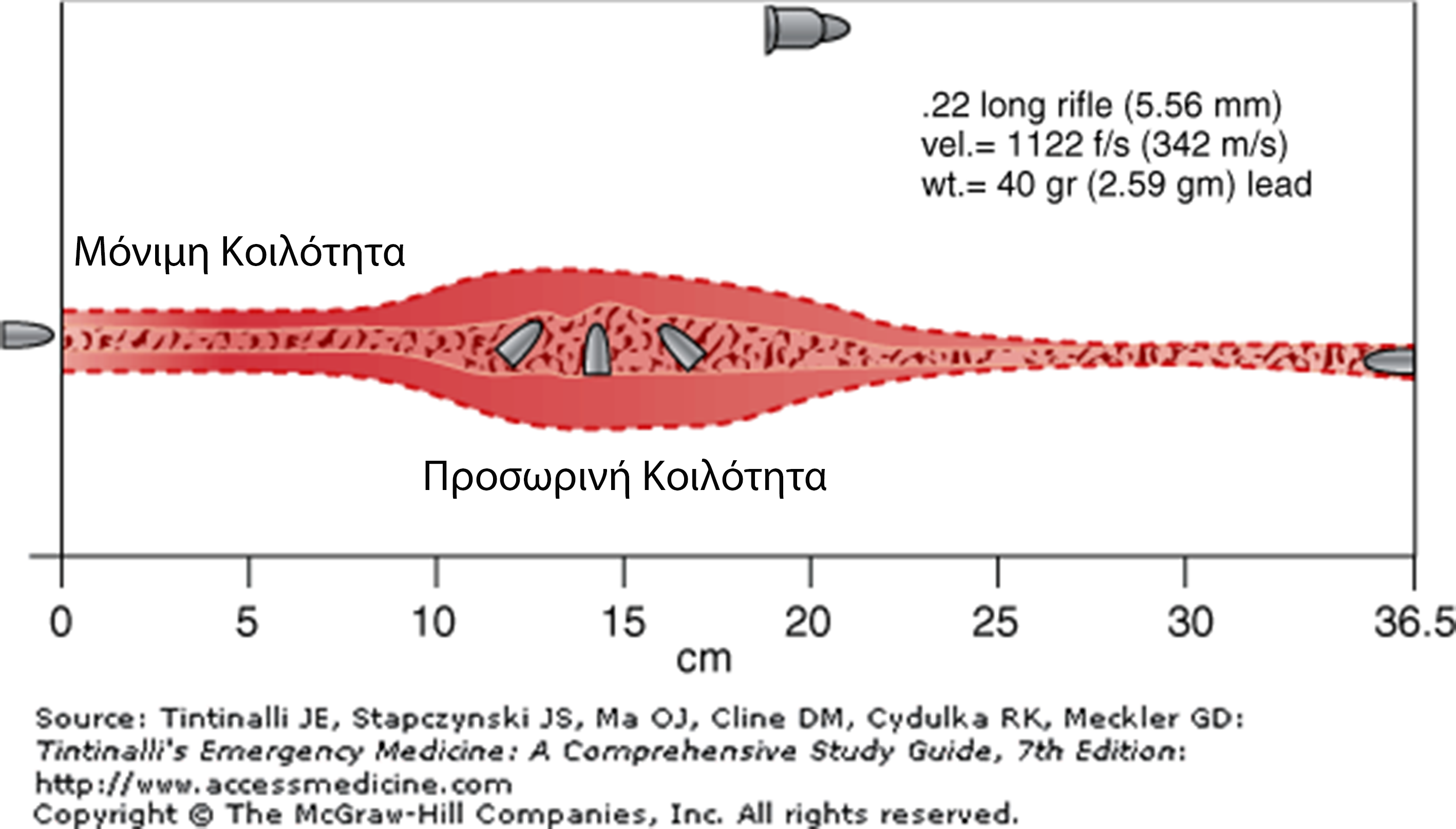
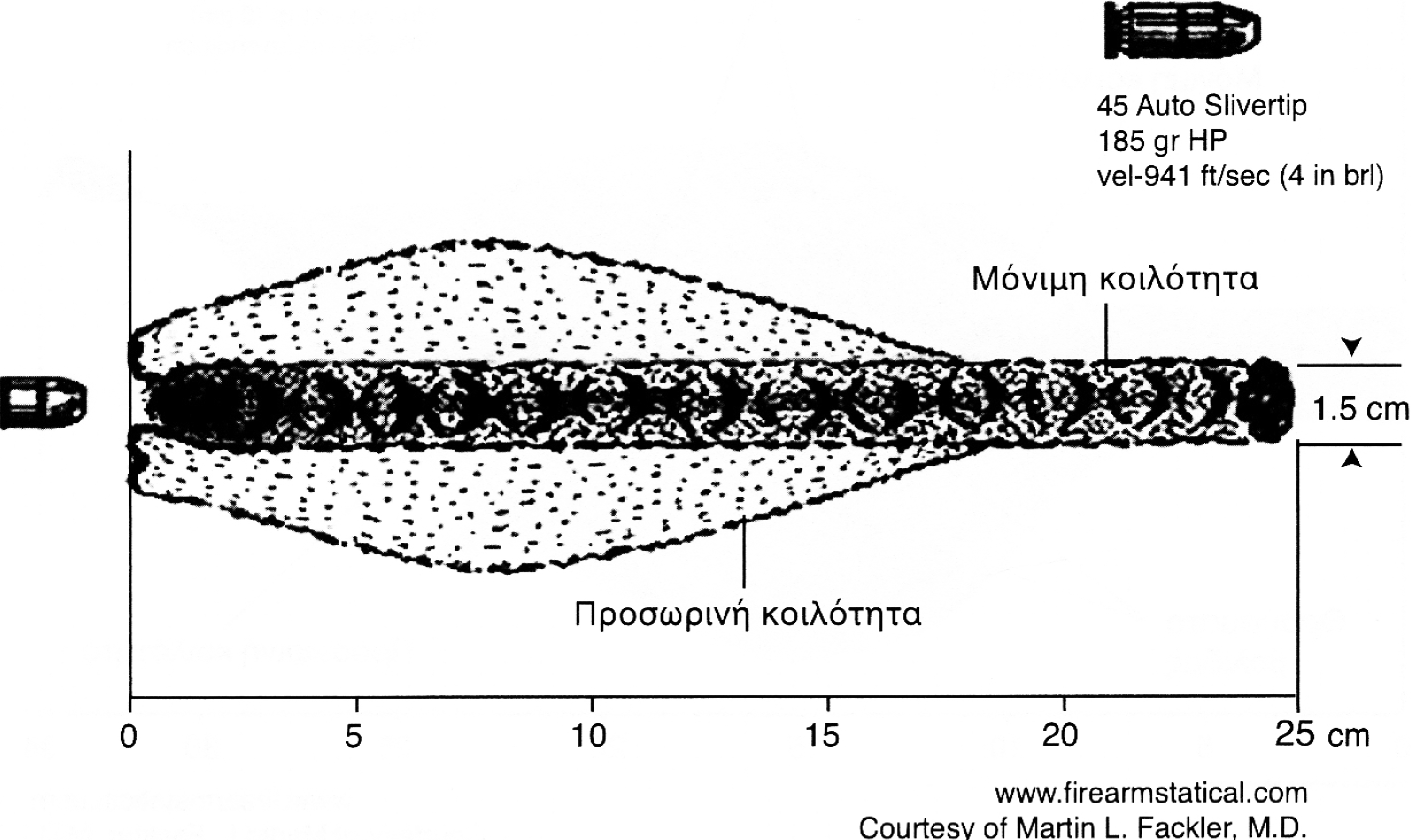
B. The formation of primary and secondary cavities within the tissues: the permanent and temporary wound cavities.
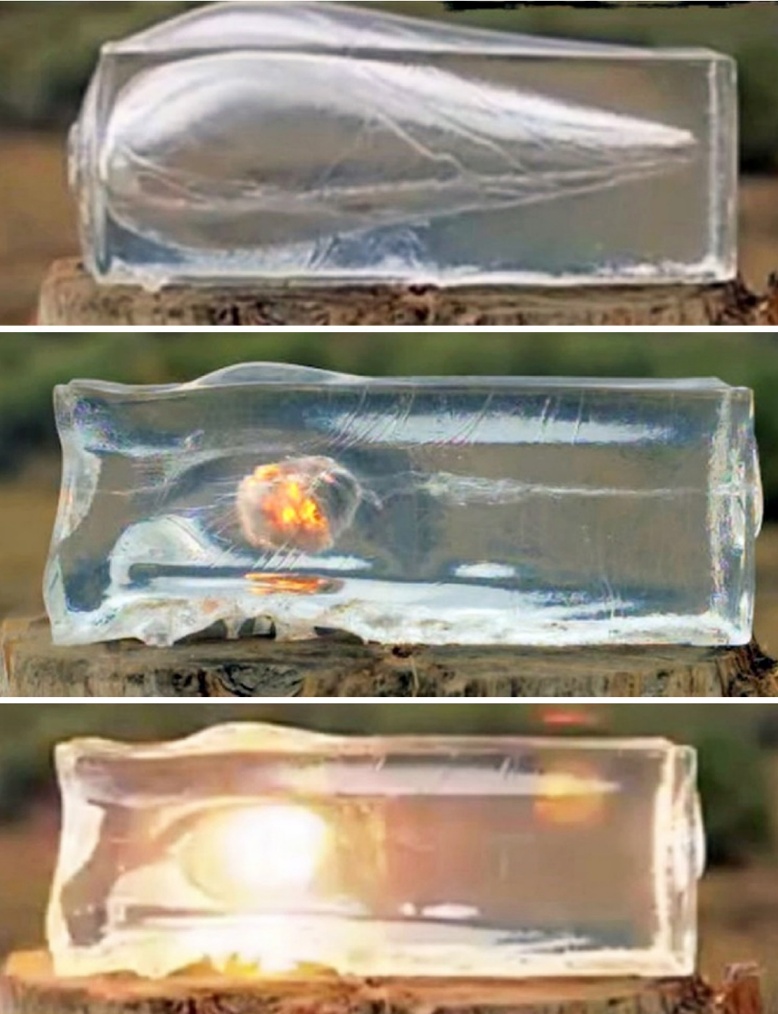
C. The forces exerted on bones and organs as a result of energy release.
D. The severity and extent of injuries.
Most people conceive of a gunshot wound as a bullet passing through the body like a drill through wood and producing a perforation—that is, a hole with fixed circumferential margins.
This conception is incorrect because a bullet moving through the body crushes and lacerates tissue along its path while simultaneously displacing the surrounding tissue radially outward, thereby creating a temporary cavity significantly larger than the bullet's diameter.
The temporary cavity lasts 5–10 ms from its initial rapid expansion until its collapse. It undergoes a series of progressively smaller pulsations and contractions before finally disappearing and leaving the permanent wound cavity.
The combination of tissue damage within the permanent cavity and the effects of the temporary cavity on the tissue surrounding the bullet path (tissue disruption, compression, and stretching) ultimately determines the extent of the wound.
The location, size, and shape of the temporary cavity depend on the amount of kinetic energy lost by the bullet as it passes through tissue, the rate at which that energy is lost, and the elasticity and cohesiveness of the tissue.
 |  |  |
